Wheel and rim technical guide
Every choice you make in the configurator, explained in the order you make it. The letters in the drawings, such as E for the offset, are the same letters as in the parameter table at the bottom and on our drawings.
Rim size: how to read 6.00Ix10
You choose this in the configurator: Rim size and diameter
A rim designation such as 6.00Ix10 tells you four things:
- 6.00: the rim width between the flanges in inches B.
- I: the flange type, the shape of the rim profile D. The letters follow ETRTO.
- x or -: the construction A. x is a one-piece welded well-base rim, - is a two-piece flat-base rim bolted together.
- 10: the diameter of the bead seat in inches C. It must be the same as the last figure of the tyre size.
A tyre fits a rim when the diameters are equal and the rim width is approved for that tyre. The configurator only shows combinations that fit.
Integral hub or hub fitting
You choose this in the configurator: Construction
The centre of the rim decides how the wheel is mounted. This is the first technical choice in the configurator.
Integral hub (bearings)
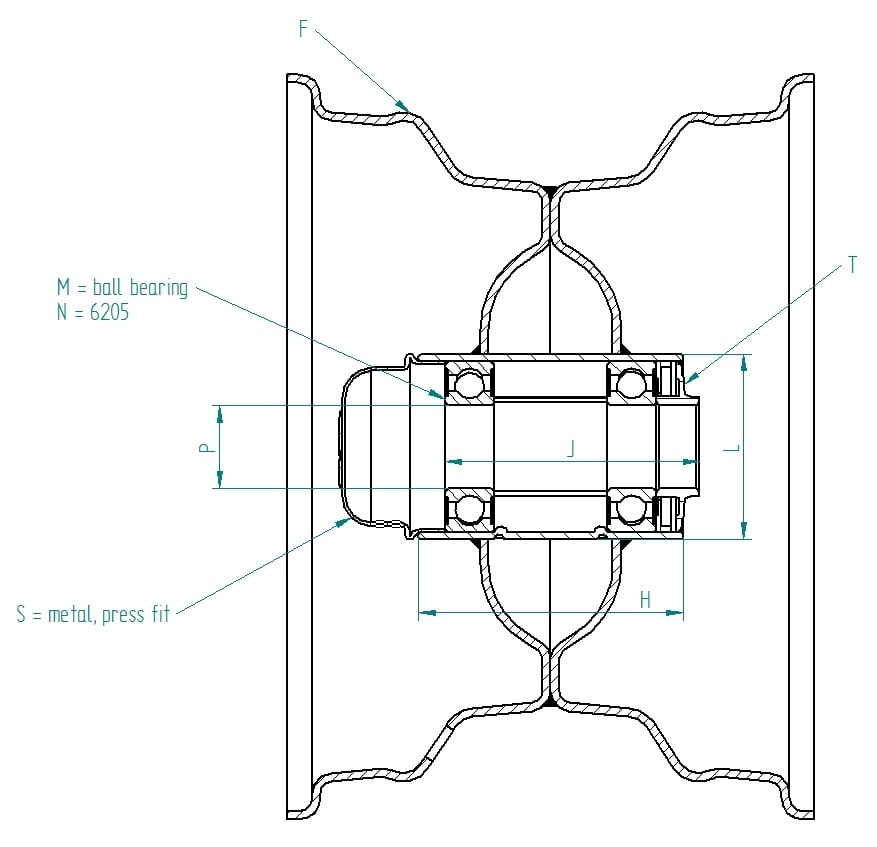
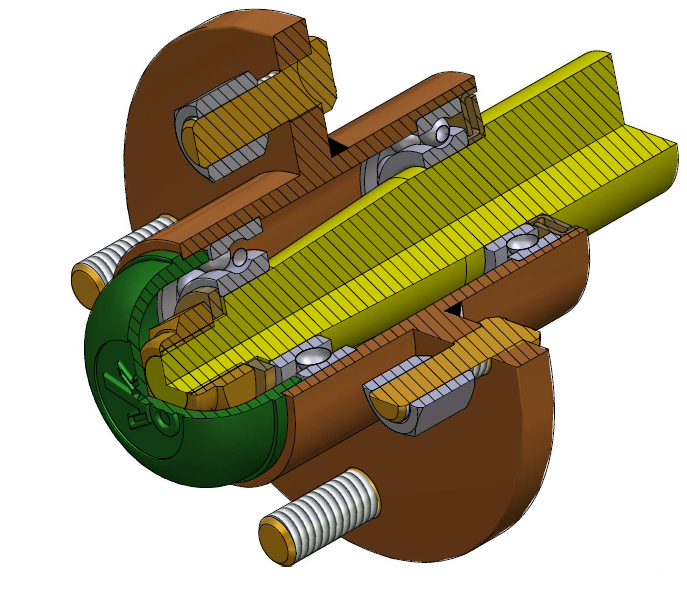
A tube is welded in the centre of the rim and the bearings sit inside it. The wheel turns on its own bearings around a fixed axle. Used for materials handling equipment, wheelbarrows, agricultural and horticultural machines, static caravans and trailers.
You choose: bore, bearing type and fitting length.
Hub fitting (PCD)
The centre disc has stud holes on the pitch circle of the studs of your hub. The wheel is bolted to a hub that carries the bearings. Used for slow-speed industrial applications, agriculture and high-speed trailers and caravans.
You choose: centre bore, pitch circle, number of studs and offset.
Keyway (driven)
A hub with a keyway slot on a shaft, so the wheel is driven or drives. Always made to order.
You give: shaft diameter and keyway width Q.
Bore, bearing and fitting length
You choose this in the configurator: Bore, bearing and fitting length
For a rim with an integral hub you choose the axle and the bearing:
- Bore P: the inside diameter of the bearing, which is the axle diameter. A hub can have two different axle holes; then the largest and the smallest are given.
- Bearing type M: ball bearing, taper roller, spherical roller, roller bearing, bush, plain bronze, self-lubricating, nylon, or a plain bore without bearing. The bearing number N gives the exact dimensions; choose premium or standard quality O.
- Fitting length J: the distance between the mounting faces, from the outside of one bearing to the outside of the other. It must match the space in your fork or on your axle. The hub length H and hub diameter L follow from it.
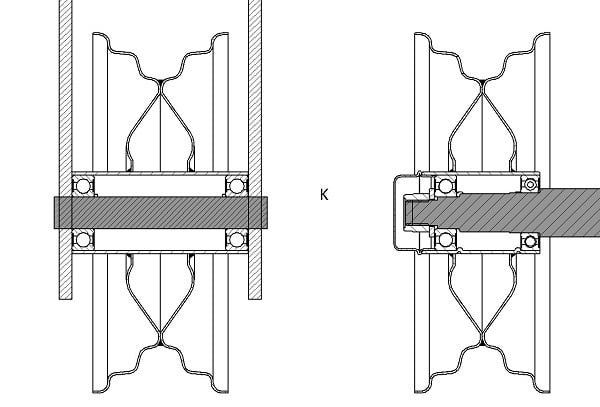
- Fitting type K: in a fork, usually with two identical axle holes, or as an end wheel, usually with two different axle holes and bearings.
- Options: grease nipple R, plastic or metal end cap S and extra seals to protect the bearings T.
Keyway for a driven wheel
You choose this in the configurator: Construction: keyway

Hub fitting: centre bore, pitch circle and stud holes
You choose this in the configurator: Hub fitting A / B / C
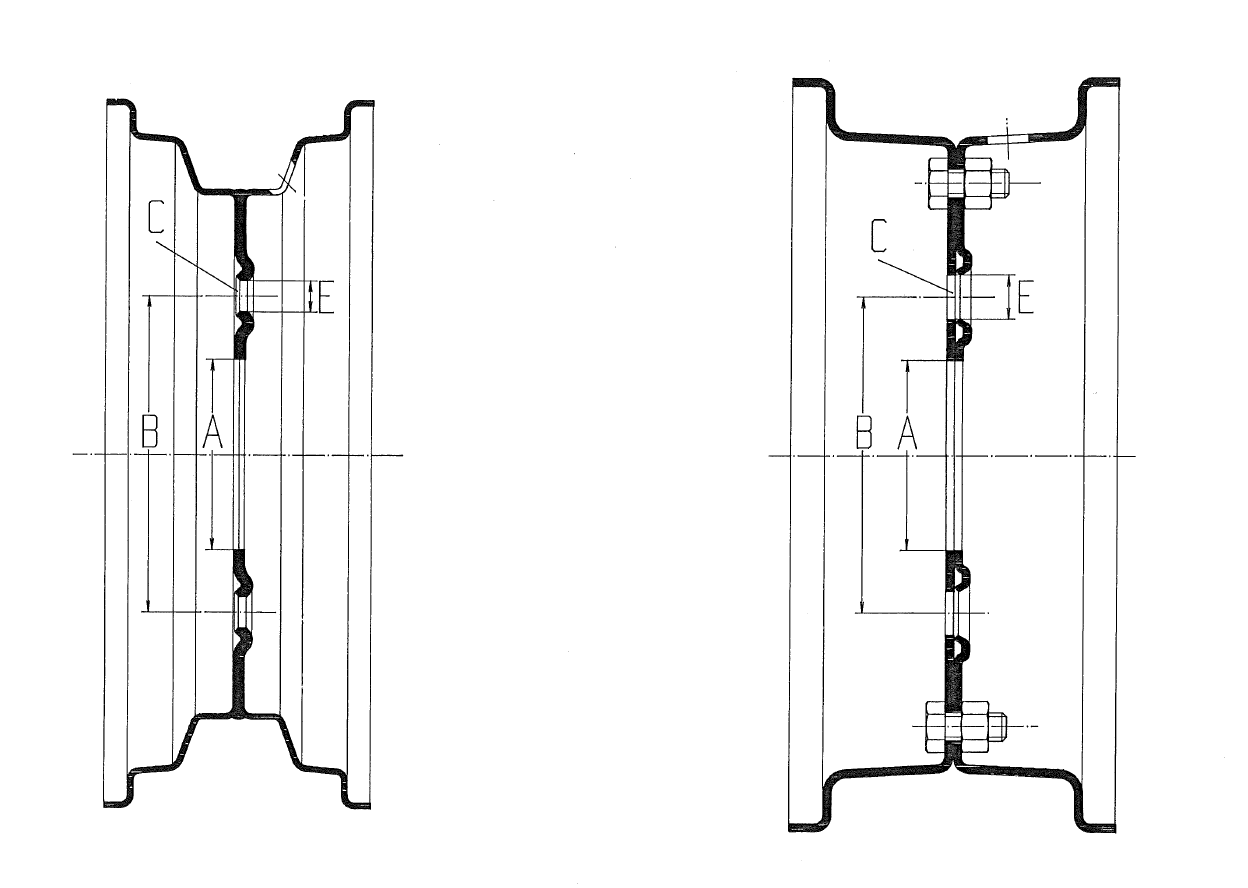
A rim for hub fitting must match the hub exactly. We write the hub fitting as A / B / C, the letters in the drawing below, for example 60/100/4:
- A, centre bore U: the hole in the middle, in mm. It must be larger than the hub collar.
- B, pitch circle diameter (PCD) V: the imaginary circle through the centres of the studs, in mm.
- C, number of stud holes W, with their diameter X.
How to measure the PCD. With 4 studs, measure from the centre of one stud straight across to the centre of the opposite stud: 4x100 means four studs evenly spaced on a 100 mm circle. With 5 studs no stud is opposite; measure from the centre of one stud to the far edge of the hole that lies between the two opposite studs, or ask us to check your hub.
Stud hole shape
You choose this in the configurator: Stud hole
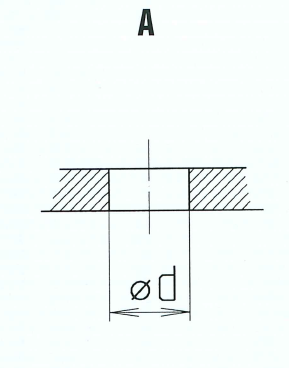
The seat of the stud holes Y must match your wheel nuts or bolts, otherwise the wheel comes loose. Vlukon rims are pressed with a standard seat of 60° conical or spherical, depending on the rim type. Cylindrical holes and other shapes are made on request.
- Type A and B: standard stud holes.
- CE and CD: conical countersink.
- DE and DD: spherical countersink.
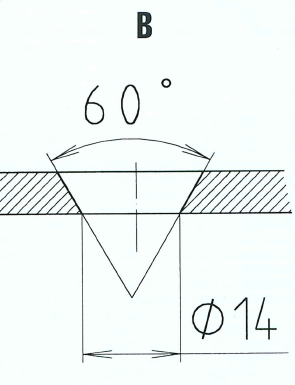
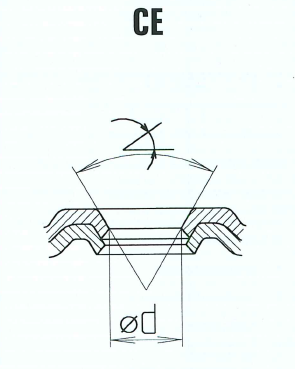
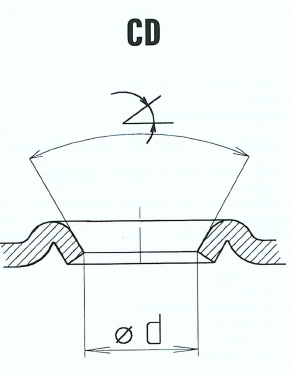
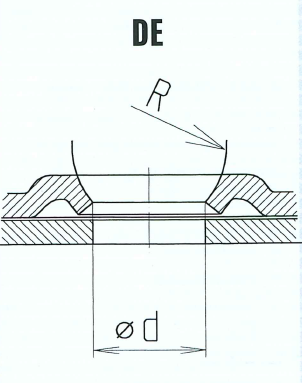
| No. | Diameter (mm) | Angle | Thread |
|---|---|---|---|
| 1 | 12.5 | 60° | M10x1.25 |
| 2 | 13.5 | 60° | M12x1.50 |
| 3 | 14 | 60° | M12x1.50 |
| 4 | 15 | 60° | M12x1.50 |
| 5 | 16 | 60° | M12x1.50 |
| 6 | 18.5 | 60° | M14x1.50 |
| 11 | 10.5 | 90° | M10x1.25 |
| 12 | 12.5 | 90° | M12x1.50 |
| No. | Diameter (mm) | Radius | Thread |
|---|---|---|---|
| 1 | 12 | R10 | M10x1.25 |
| 2 | 15 | R12 | M12x1.50 |
| 3 | 16 | R12 | M12x1.50 |
| 4 | 18.5 | R12 | M14x1.50 |
| 5 | 18.5 | R14 | M14x1.50 |
Offset (ET)
You choose this in the configurator: Offset ET
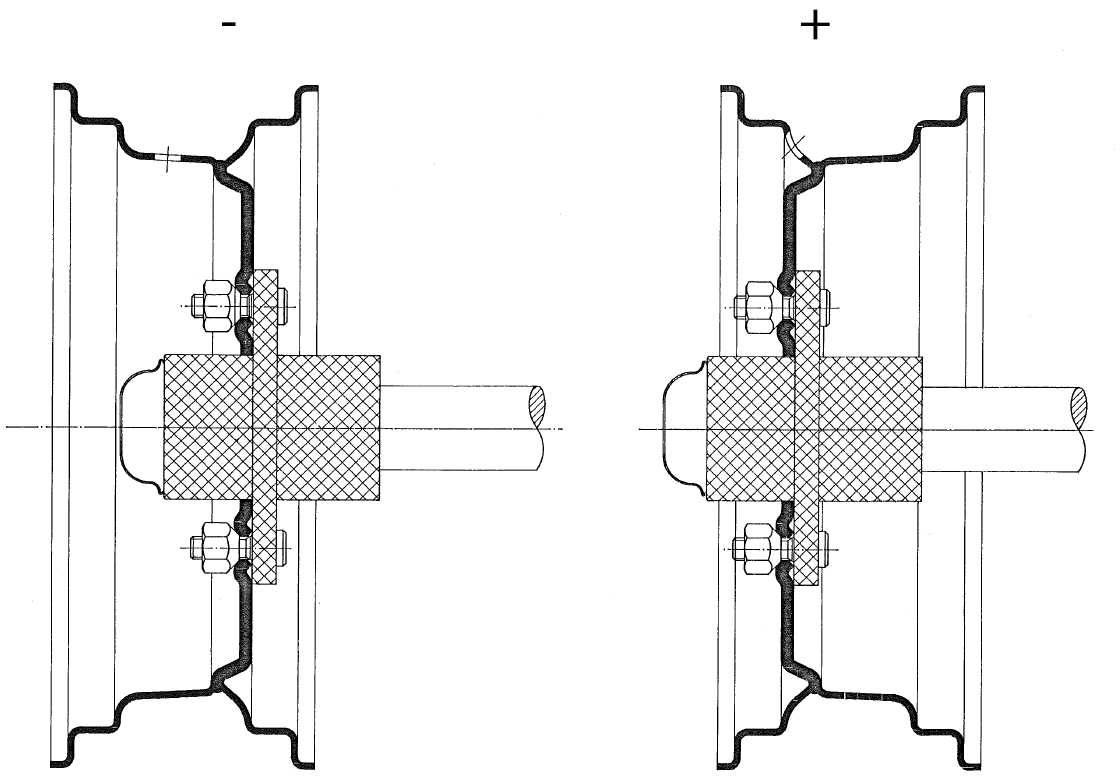
The offset E is the distance in mm from the centre line of the rim to the mounting face of the centre disc. It can be positive (+) or negative (-); at ET0 the mounting face is exactly in the middle of the rim. The drawing shows both directions.
The offset decides the track width and whether the tyre clears the frame, the mudguard and the brake. When you replace a wheel, use the same offset as the old one.
Safety hump, material and other details
You choose this in the configurator: Rim details
- Safety hump F: a raised ring on the bead seat that keeps a tubeless tyre on the rim at low pressure: none, one side (1H) or both sides (2H).
- Material thickness G of the rim and of the centre disc AD, in mm.
- Valve hole Z and an optional steel valve guard AB.
- Drainage holes AC so no water collects in the rim.
- Markings AA: rim size and drawing number stamped on the rim.
Paint finish and colours
You choose this in the configurator: Colour
Vlukon powder coats every rim in its own coating line: degreasing, phosphating, washing, drying, powdering and curing in the oven. This gives a hard, even layer that protects the steel.
The standard colours are coated every week. Other RAL colours are coated on request; the surcharge depends on the quantity.
Load capacity
You choose this in the configurator: Application
A load capacity only means something for a given speed, tyre, pressure and use. Since 2018 we state load capacities only for a specific application, so we can choose a wheel with enough capacity and safety margin without making it heavier than needed. Tell us the load per wheel, the speed and the use, and we select the wheel.
Engineering and CAD models
You choose this in the configurator: Drawing and STEP file
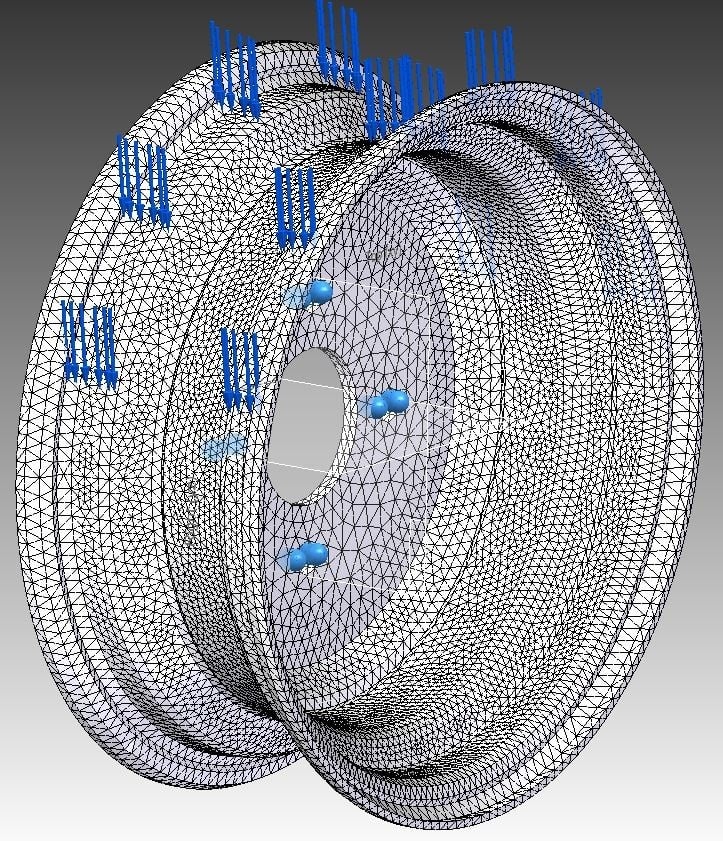
With more than 400 tools our rims are modular: our engineers configure your wheel from one of our many standard rims, and our in-house tool shop makes changes quickly. For a new development we make the CAD model for you, and we support you with finite element analysis (FEM) and simulation.
CAD files on request in: STEP AP203 and AP214, IGES, Parasolid and ACIS (all 3D).
Heavy-duty rims with a centre bore for flange fitting
You choose this in the configurator: Hub fitting
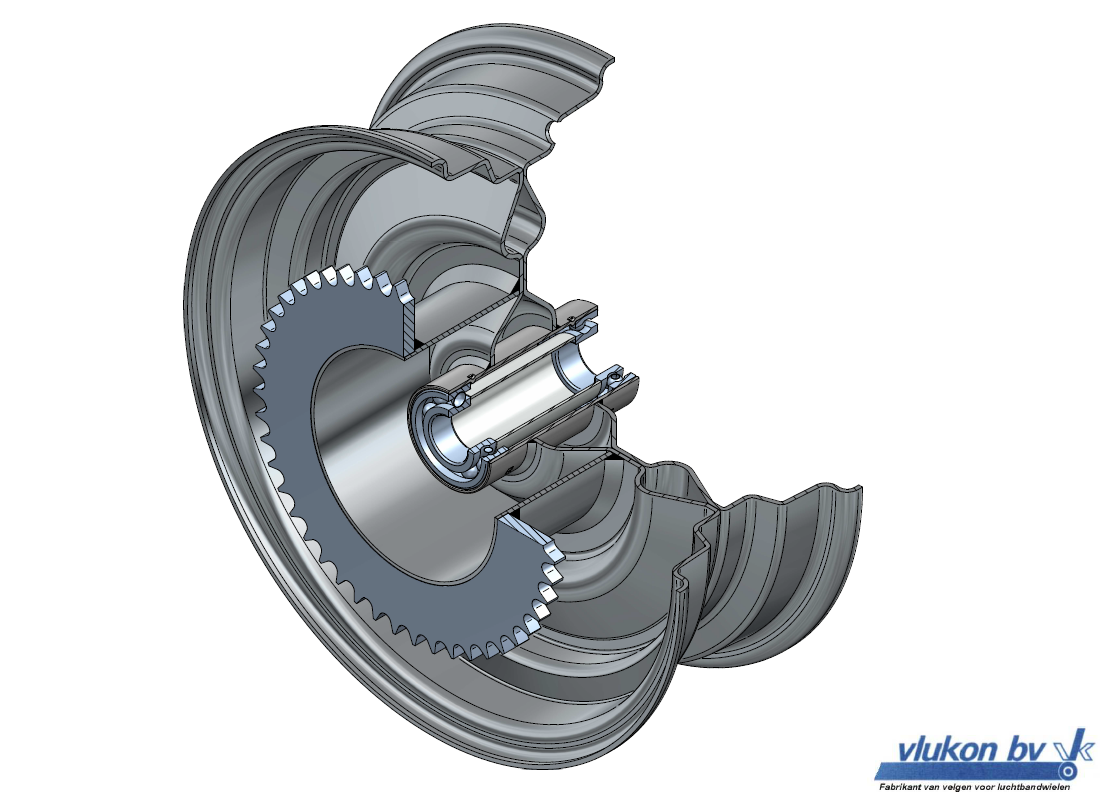
Rims with a centre bore for a flange hub carry heavy loads in repetitive processes: heavy-duty carts, material transfer vehicles, foundry cooling lines and turntables. They are used in mining, chemical and food processing, offshore, plant engineering and wastewater treatment. Flange fittings are available for rims from 3 to 15 inch, in small quantities and in your colour.
All rim and hub parameters (A to AD)
Use these letters when you describe a wheel to us: they are on our drawings and in the pictures in this guide.
| Letter | Parameter | Unit | What it means |
|---|---|---|---|
| A | Type | One-piece welded rim (x) or two components bolted together (-). | |
| B | Width of rim | inch | Width between the flanges. |
| C | Diameter of rim | inch | Diameter of the bead seat. |
| D | Flange type | Shape of the rim profile, to ETRTO. | |
| E | Offset | mm | Offset of the mounting face from the centre line of the rim. |
| F | Hump | 0 / 1H / 2H | Number of safety humps that keep the tyre on the rim. |
| G | Rim thickness | mm | Material thickness of the rim. |
| H | Hub length | mm | Length of the hub. |
| J | Fitting length | mm | Distance between the mounting faces of a rim with a hub. |
| K | Fitting type | In a fork (two identical axle holes) or as an end wheel (two different axle holes and bearings). | |
| L | Hub diameter | mm | Outer diameter of the hub. |
| M | Bearing type | Ball, taper roller, spherical roller, roller, bush, plain bronze, self-lubricating, nylon or none (plain bore). | |
| N | Bearing number | Identifies the bearing dimensions. | |
| O | Bearing quality | Premium or standard. | |
| P | Axle hole | mm | Largest and smallest axle hole; can be the same. |
| Q | Keyway width | mm | Width of the keyway slot. |
| R | Grease nipple | yes / no | Grease nipple in the hub. |
| S | Type of cap | End cap, plastic or metal. | |
| T | Seals | Extra seals to protect the bearings. | |
| U | Hub hole diameter | mm | Minimum centre bore. |
| V | Pitch circle diameter | mm | Diameter of the circle through the mounting bolts. |
| W | Number of bolt holes | Number of mounting bolts. | |
| X | Diameter bolt holes | mm | Diameter of the mounting bolt holes. |
| Y | Shape stud holes | Seat of the bolt holes: 60° conical, spherical (for example R14) or cylindrical. | |
| Z | Valve hole diameter | mm | Diameter of the valve hole. |
| AA | Markings | yes / no | Rim size and drawing number marked on the rim. |
| AB | Valve guard | yes / no | Steel cap that protects the valve. |
| AC | Drainage holes | yes / no | Holes that stop water collecting in the rim. |
| AD | Inner disc thickness | mm | Material thickness of the centre plate. |
Frequently asked questions
How do I read a rim size such as 6.00Ix10?
6.00 is the rim width in inches, I is the flange type, x means a one-piece welded well-base rim (- means a two-piece bolted flat-base rim) and 10 is the rim diameter in inches.
What is the difference between an integral hub and a hub fitting?
A rim with an integral hub has a welded tube with its own bearings and turns around a fixed axle. A rim for hub fitting has stud holes and is bolted to a hub that carries the bearings.
What does hub fitting 60/100/4 mean?
A centre bore of 60 mm, a pitch circle diameter of 100 mm and 4 stud holes.
What is the offset ET of a wheel?
The distance in mm from the centre line of the rim to the mounting face of the centre disc. It can be positive or negative; at ET0 the mounting face is in the middle. A replacement wheel needs the same offset.
What is the fitting length of a wheel with bearings?
The distance between the mounting faces, from the outside of one bearing to the outside of the other. It must match the space in the fork or on the axle.
Which stud hole shapes does Vlukon make?
Standard 60° conical or spherical seats, depending on the rim type; cylindrical and other shapes on request.
Why does Vlukon not publish load capacities?
A load capacity depends on speed, tyre, pressure and use. Since 2018 Vlukon states it for your specific application, so the wheel is strong enough without being oversized.
In which CAD formats can I get a Vlukon wheel?
STEP AP203 and AP214, IGES, Parasolid and ACIS, all 3D. Many rims have a STEP file to download on the product page.
Not sure which value you need?
Send us the axle, the load and the tyre size, or a sketch with the letters from this guide. Our engineers reply within one working day.